







You're in the aisle holding two bottles. Both say color-safe. One's $9, one's $34, and the ingredients lists barely look like they're speaking the same language. There's no obvious way to tell which one is lying.
Here's the uncomfortable part. "Color-safe" isn't a regulated term. Nobody has to prove anything to print it on a bottle, and plenty of brands print it on formulas that will fade your color inside a month. Understanding what color-safe shampoo means in practice comes down to ignoring the front of the bottle entirely and learning to read about six lines on the back.
Learn it once in ten minutes, and you'll never look at shampoo labels the same way.
What Does "Color-Safe" Mean?
It's a marketing claim, not a certification. There's no standard behind it and no testing requirement.
That said, formulas that truly deserve it usually have four things in common:
- pH between roughly 4.5 and 5.5. Your hair's natural range. Anything more alkaline lifts the cuticle, and an open cuticle lets pigment out.
- No sulfates. The single biggest factor.
- No high concentration of sodium chloride. Cheap thickener, dehydrating.
- No drying alcohols high in the list.
A $9 bottle can claim to be color-safe while sodium laureth sulfate sits second on the ingredient list. That's not misleading by regulation. It simply means the claim deserves a closer look.
What Does "Sulfate-Free" Mean?
Sulfates are the detergents that make shampoo foam properly. The two you'll see most are sodium lauryl sulfate (SLS) and sodium laureth sulfate (SLES).
They work well, they're cheap, and they can't tell the difference between yesterday's dry shampoo and the dye sitting inside your hair. Both come out together.
Sulfate-free means the formula uses gentler surfactants instead. Usually glucosides, sulfosuccinates, or something amino-acid derived. You'll see less foam, but don't mistake that for less cleaning power. Lather and cleansing aren't the same thing.
Watch for the loophole. Some "sulfate-free" formulas swap in sodium C14-16 olefin sulfonate, which isn't technically a sulfate and behaves a lot like one anyway.
What Does "Paraben-Free" Mean?
Parabens are preservatives. Methylparaben, propylparaben, butylparaben. They keep your shampoo free from unwanted microbial growth, and they're effective, reliable, and widely used for that reason.
They don't strip color. That's worth making clear because those two claims are often bundled together on packaging as if they mean the same thing.
The real concern is that they can irritate sensitive scalps, and a healthy scalp is the foundation for healthy-looking hair. Since perfectly good paraben-free preservation exists, there's not much reason to accept them. But if you're only going to care about one word on the label, sulfate-free is the one protecting your color.
The Label Terms That Mean Nothing
Some of these will be on products we sell. They still mean nothing.
- "Salon quality" and "professional formula": no definition, no requirement.
- "Natural" and "clean": unregulated in the US for cosmetics.
- "Dermatologist tested": tested, yes. Doesn't say what the result was.
- "Clinically proven" without a linked study: assume nothing.
- Long "free-from" lists: when a bottle brags about excluding twelve things nobody uses anymore, that's marketing filling space the formulation couldn't.
- "For color-treated hair" on its own: same problem as color-safe. Check the back.
Ingredients to Avoid on Colored Hair
| What to look for | Why it matters | Names on the label |
|---|---|---|
| Sulfates | Lift the cuticle; pigment leaves with the dirt | Sodium lauryl sulfate, sodium laureth sulfate, ammonium lauryl sulfate |
| Sulfate look-alikes | Marketed as sulfate-free, behave similarly | Sodium C14-16 olefin sulfonate |
| Salt, high in the list | Cheap thickener, dehydrating over time | Sodium chloride |
| Drying alcohols | Pull moisture out of the strand | Alcohol denat., ethanol, isopropyl alcohol |
| Parabens | Linked to scalp irritation | Methylparaben, propylparaben, butylparaben |
| Formaldehyde releasers | Irritation risk | DMDM hydantoin, quaternium-15 |
| Peroxide in non-color products | Lightens what you paid to deposit | Hydrogen peroxide |
Two things people get wrong here, and both are worth knowing.
Fatty alcohols are perfectly fine. Cetyl, stearyl, and cetearyl alcohol are conditioning agents, not drying ones, and they're in most good conditioners. The word "alcohol" is doing a lot of unearned damage on that ingredient list.
Silicones aren't evil either. Dimethicone and its relatives smooth the cuticle and add shine. They just build up, which dulls color over time. That's an argument for clarifying once a month, not for avoiding them.
How to Actually Read an Ingredients List
These three quick rules are all you need.
Ingredients above 1% concentration have to be listed in descending order. Ingredient order tells you quantity, so the first five ingredients make up most of what you're buying.
Water is almost always first. That's normal, not a scam.
Once you hit the preservatives and fragrance, everything after that is present at under 1%. Which means a brand can put a hero ingredient on the front of the bottle while including a rounding error of it at the back. Check where it actually sits.
One honest limitation. You can't read pH off an ingredients list, and most brands don't publish it. If it matters to you, ask. A brand that knows its pH will tell you, and a brand that doesn't answer has told you something too.
What a Good Color-Safe Label Looks Like
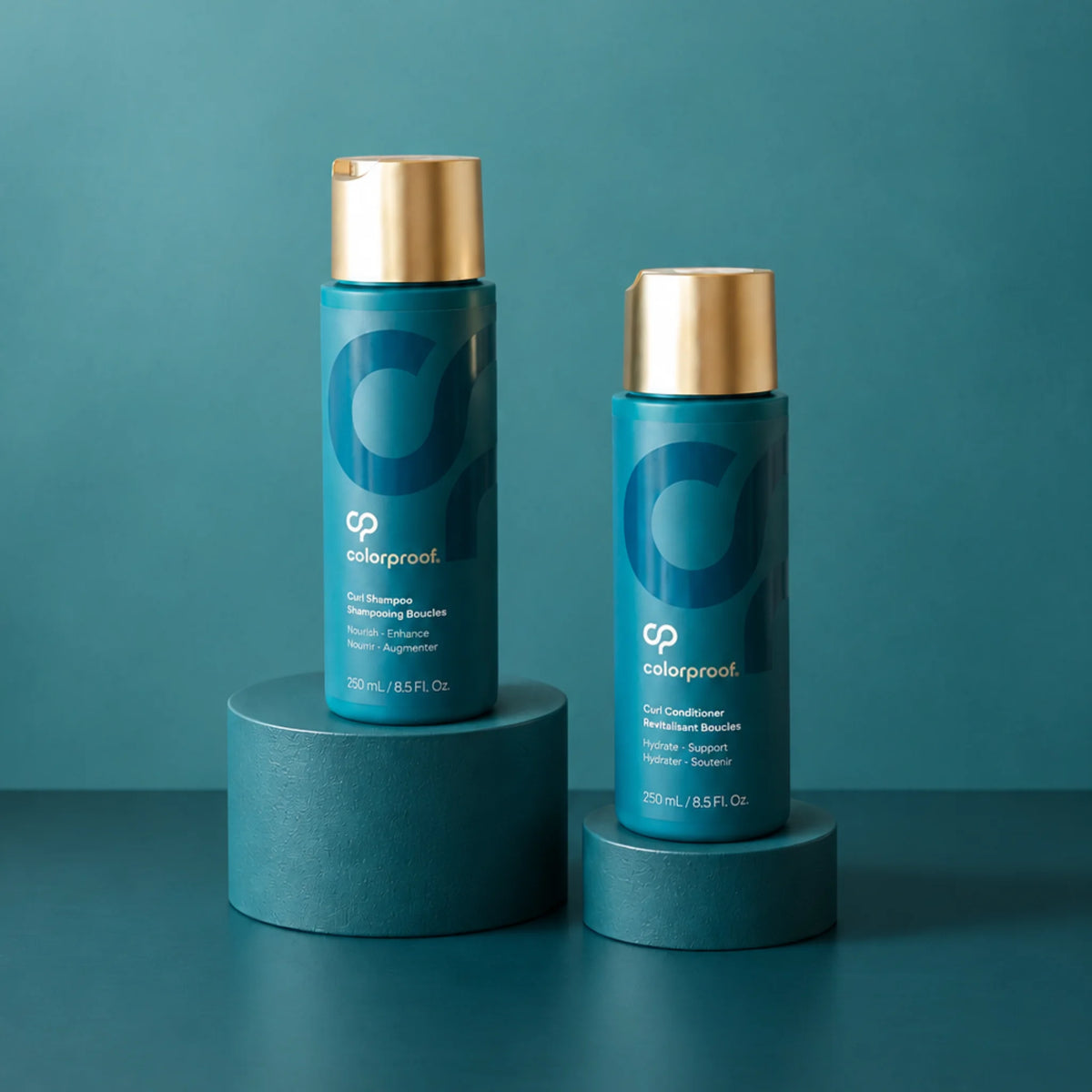
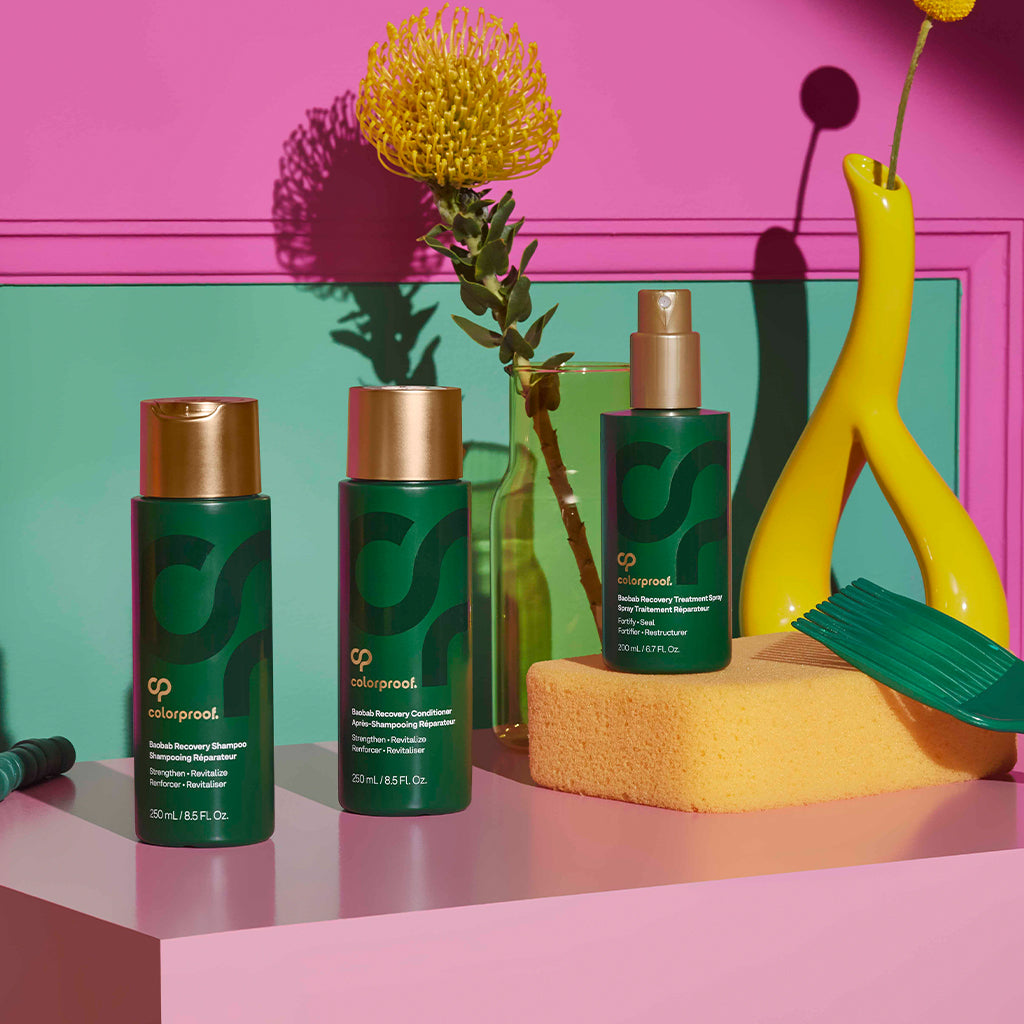
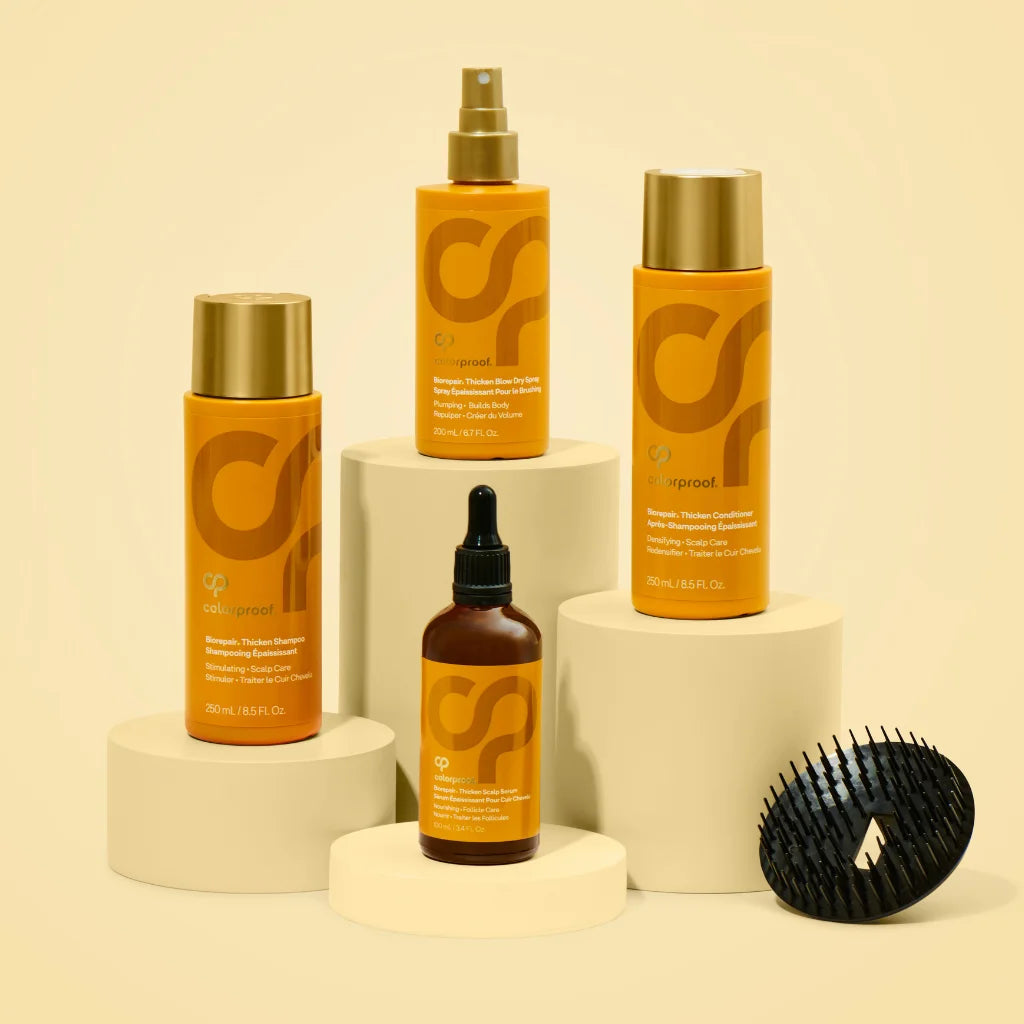
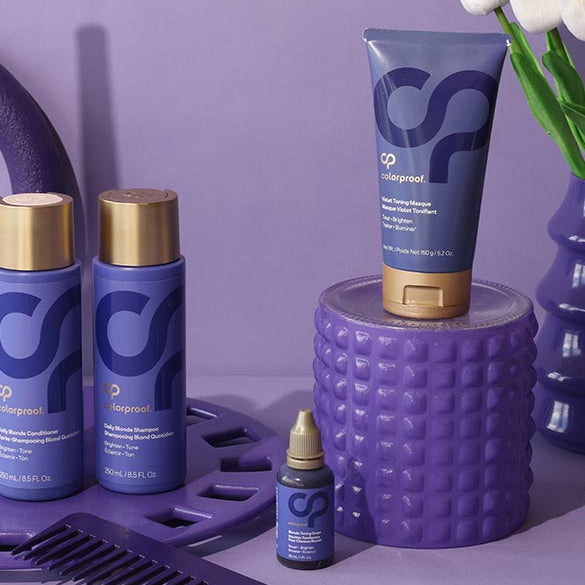
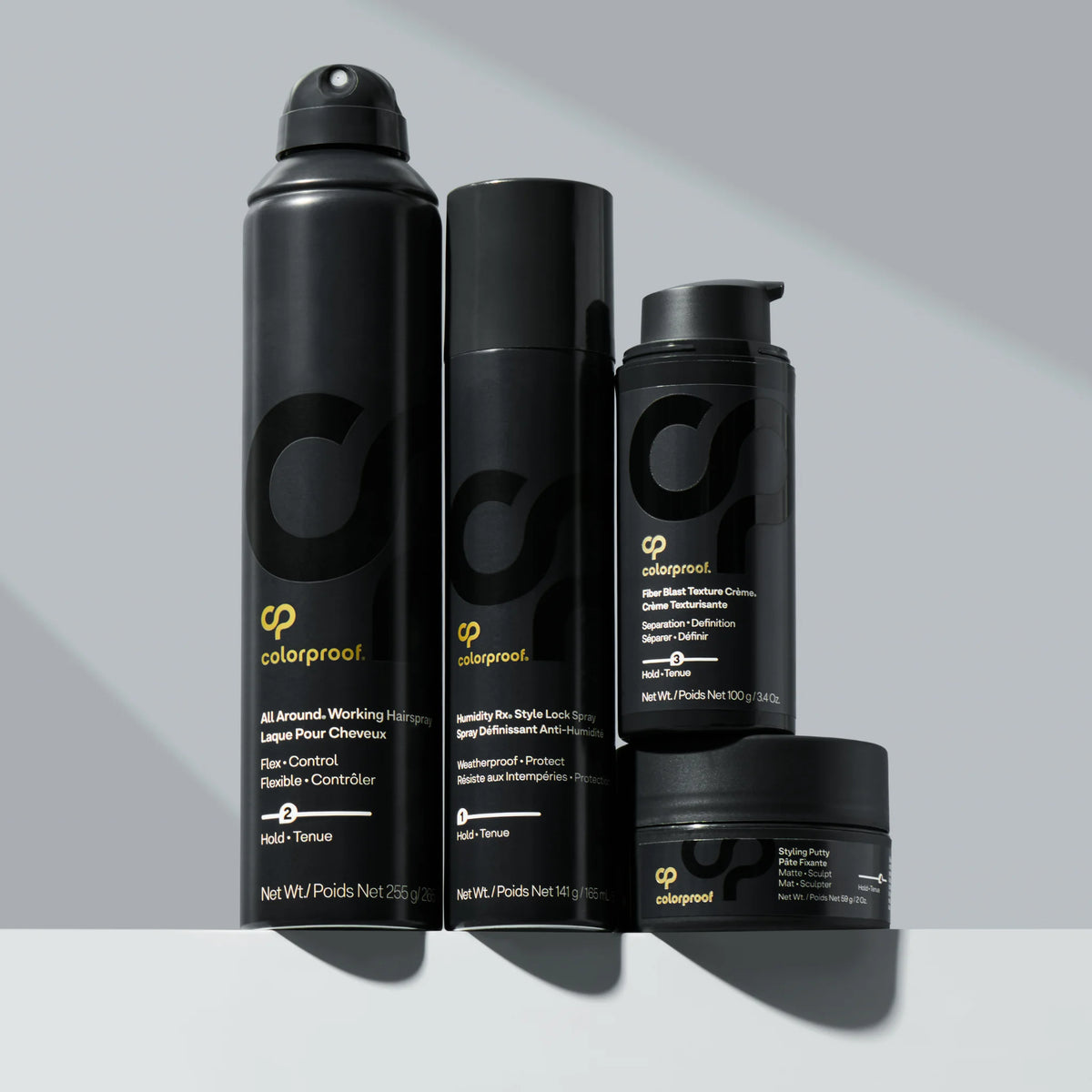
Now let's apply it to real products: every ColorProof formula is sulfate-free and paraben-free across the whole line, pH-balanced for colored hair, vegan and cruelty-free.
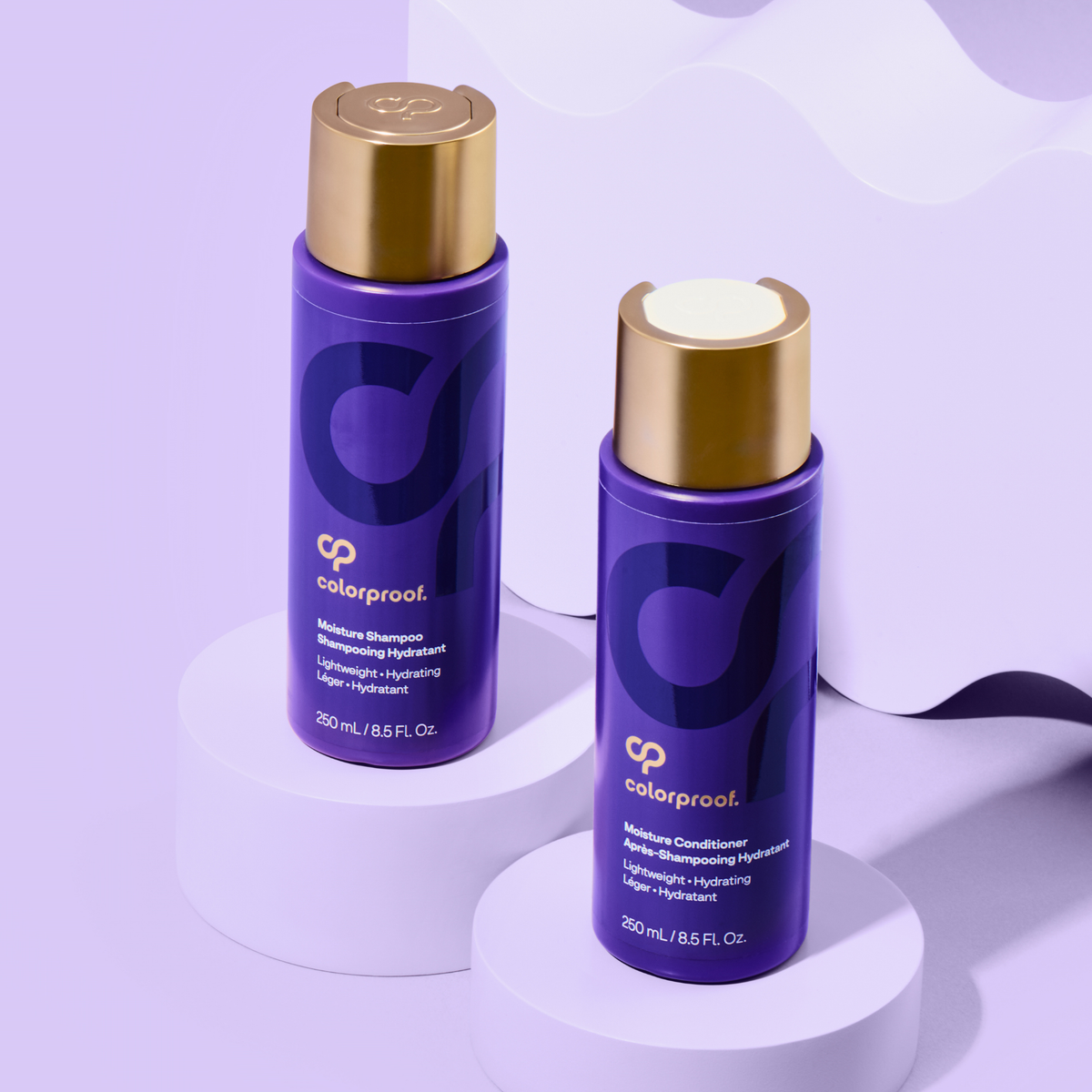
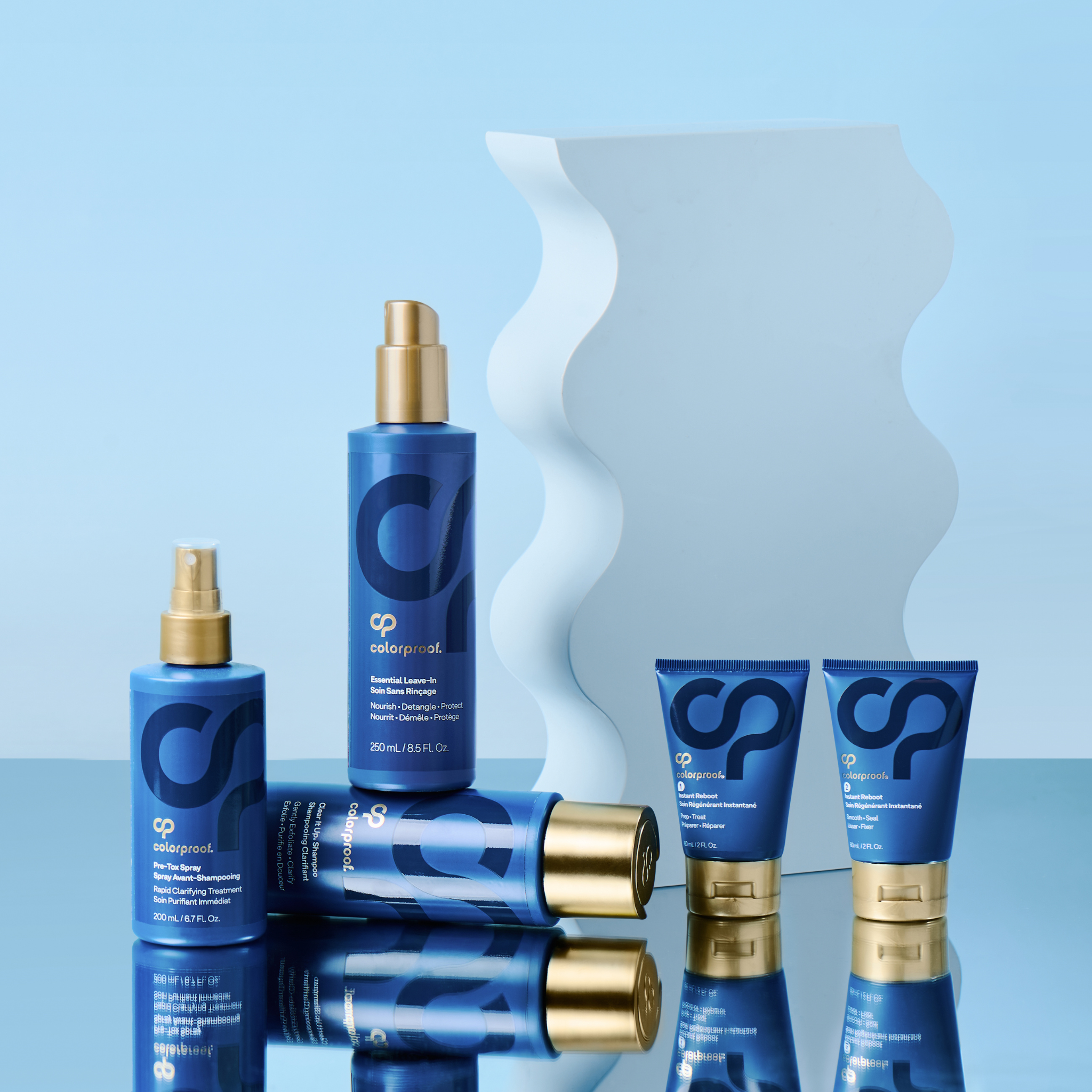
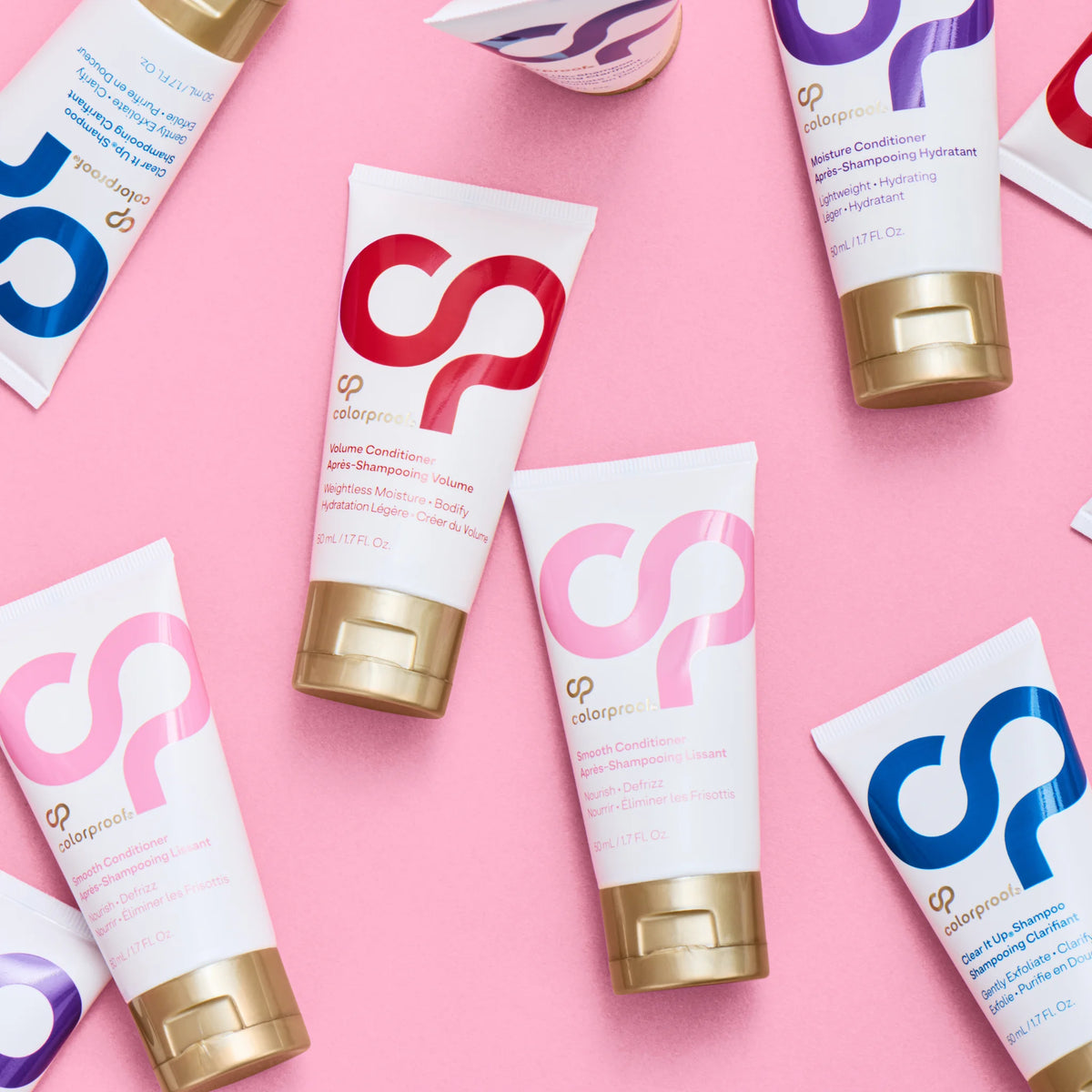
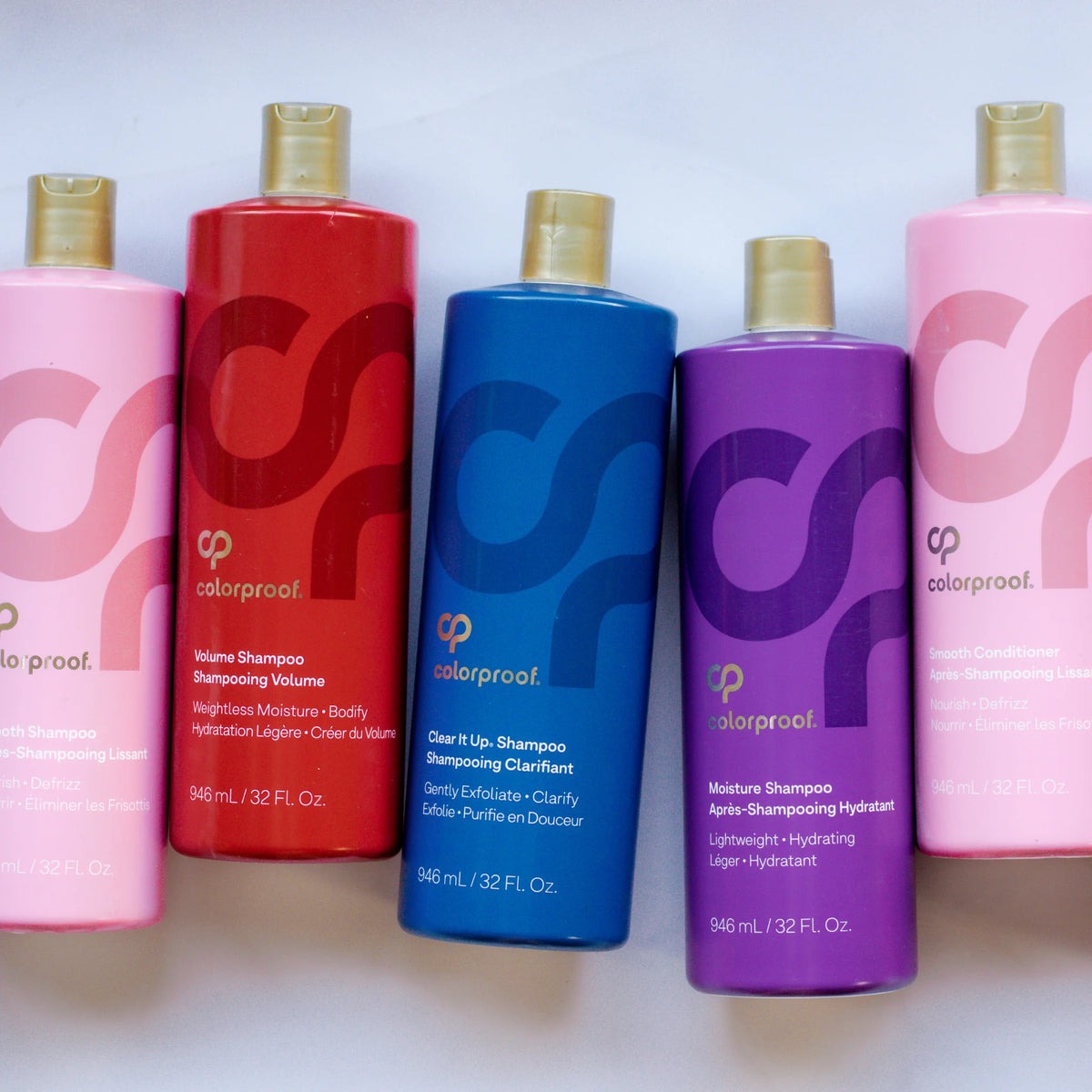
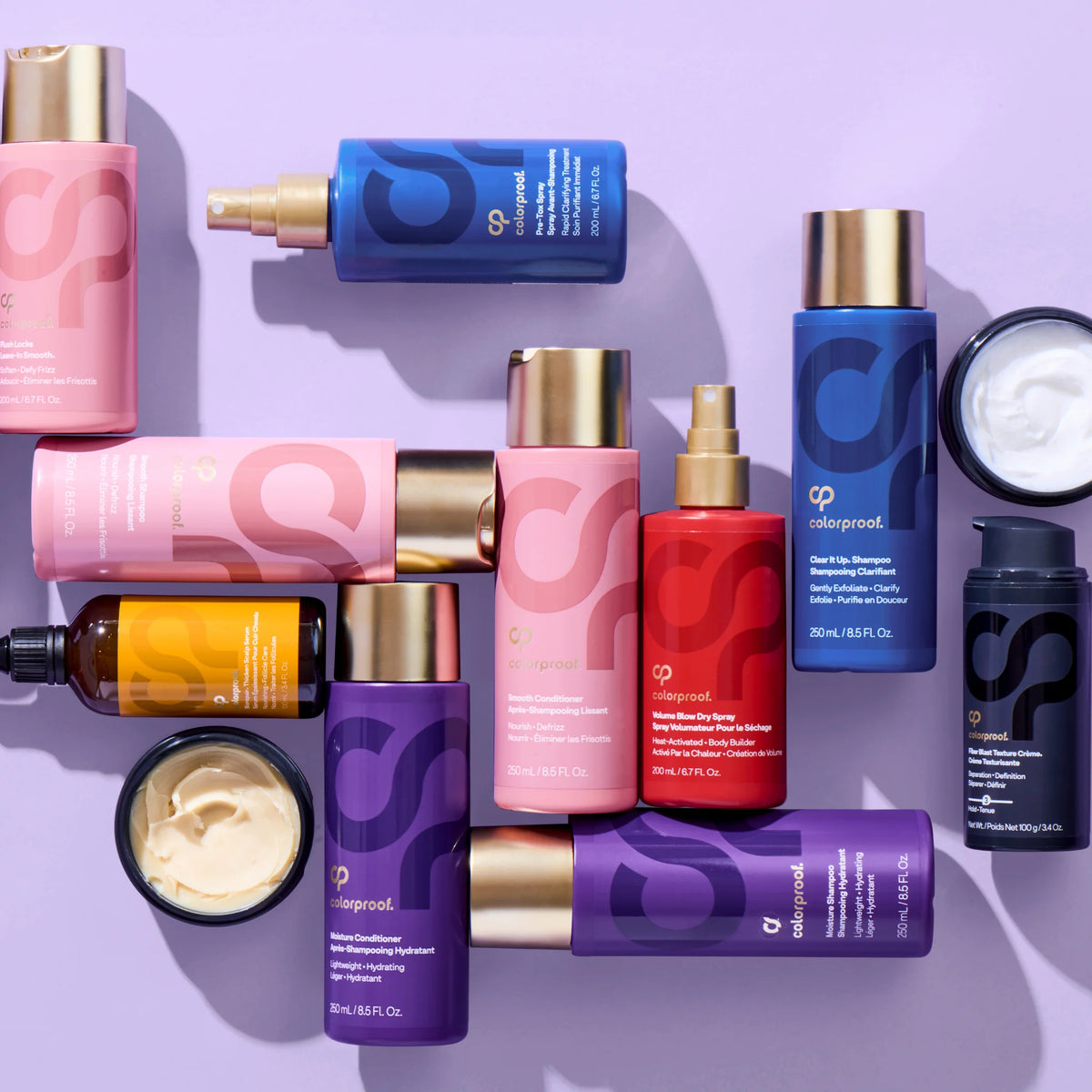
If you want to see it on an actual back label, Moisture Shampoo + Conditioner is a reasonable one to compare against whatever you're currently using. Clear It Up Shampoo is the monthly clarifier that handles the silicone buildup mentioned above, and Essential Leave-In covers heat and UV, which no shampoo can do regardless of what its label says.
Choosing between formulas is another question from reading labels, and it comes down to your hair type: how to pick a sulfate-free shampoo for your hair type. Also worth reading: why hair color fades fast
Conclusion
Choosing products for color-treated hair can feel overwhelming, especially when nearly every bottle claims to be "color-safe," "color-protecting," or "for colored hair." The truth is that these terms aren't always regulated, which means they can vary from one brand to another. That's why learning to read beyond the marketing claims and understand the ingredient list is one of the best ways to make informed decisions for your hair.
A genuinely color-friendly routine focuses on protecting both your hair color and the health of your strands. Hair coloring, particularly permanent color and bleaching, can make the hair more porous and vulnerable to dryness, fading, and breakage. Using gentle, sulfate-free cleansers, nourishing conditioners, and products formulated to support moisture and minimize color fade can help maintain vibrancy while keeping your hair stronger and smoother.
However, no shampoo or conditioner can completely "lock in" color forever. Factors such as UV exposure, heat styling, frequent washing, hard water, chlorine, and even the type of hair dye used all influence how long your color lasts. That's why a comprehensive routine—including washing with lukewarm water, limiting excessive heat, using UV protection when spending time outdoors, and deep conditioning regularly—is just as important as choosing the right shampoo.
When reading product labels, remember that marketing buzzwords don't always tell the full story. Instead, look for formulations that cleanse gently, replenish moisture, and support your hair's protective barrier without relying on unnecessarily harsh ingredients. If you have sensitive skin or a reactive scalp, it's also worth checking for ingredients that may trigger irritation and performing a patch test when trying new products.
It's equally important to recognize that every color-treated hair type has different needs. Fine hair may benefit from lightweight formulas that preserve volume, while thicker, curly, or chemically processed hair often requires richer hydration and additional conditioning. Building a routine around your hair's texture, condition, and lifestyle will always deliver better results than relying on a single label claim.
Ultimately, "color-safe" should be viewed as part of a bigger picture rather than a guarantee. The healthiest color-treated hair comes from consistent care, gentle cleansing, proper hydration, and protecting your strands from everyday damage. By understanding what product labels really mean and choosing formulas based on their ingredients and performance—not just their marketing—you can help your color stay vibrant for longer while keeping your hair soft, healthy, and resilient between salon visits.
FAQs
Q.1 What does color-safe shampoo mean?
That the brand has decided to say so. It's an unregulated marketing term with no testing behind it. A formula that earns it will be sulfate-free, pH-balanced somewhere around 4.5 to 5.5, and won't have salt or drying alcohol high in the ingredients list. Check those four things on the back rather than trusting the claim on the front.
Q.2 Is sulfate-free the same as color-safe?
No, though it's the most important part of it. Sulfate-free is a specific, checkable statement about the surfactants. Color-safe is a general claim that also depends on pH, salt content, and alcohols. A sulfate-free shampoo with a high pH can still fade your color.
Q.3 Are parabens bad for colored hair?
Not directly. Parabens are preservatives; they don't strip pigment, and the concern is scalp irritation in sensitive people. It's a hair-health issue rather than a color issue, and since good paraben-free preservation exists, there's no real trade-off in skipping them.
Q.4 Which ingredients should I actually avoid on colored hair?
Sulfates first, then sodium C14-16 olefin sulfonate, sodium chloride high in the list, and drying alcohols like alcohol denat. Skip the panic about fatty alcohols and silicones, which are useful. If you only check one thing, check the first five ingredients.