


















You started taking the medication to change your health, and it's doing its job. But somewhere in between the smaller food portions and smaller jeans, you noticed increased shedding on your hairbrush, and a new fear started keeping you awake. Let's confront it straight away: is Ozempic causing your hair loss?
The quick answer may actually shock you. The matter is quite complex and much less frightening than the information headlines make it seem. Hair loss was reported as an unwanted effect among those using GLP-1 drugs, but the reason behind it and what you can do about it plays an immense role. Let us look at the situation in detail.
Does Ozempic Cause Hair Loss?
Here's the honest answer. Does Ozempic cause hair loss directly? Not exactly. In clinical trials, a small share of people did report hair loss, so is hair loss a side effect of Ozempic? Technically yes, it's been documented. But the drug isn't poisoning your follicles. The shedding is almost always a downstream effect of how fast you're losing weight, not the semaglutide itself.
That one distinction changes everything about how you handle it, so it's worth sitting with for a second.
Is It the Drug, or the Weight Loss?
This is the crux of it. Does semaglutide cause hair loss on its own? The evidence says no, at least not directly. What these medications do so well is quiet your appetite and drive rapid weight loss, and rapid weight loss is a textbook trigger for a temporary type of shedding called telogen effluvium.
When your body drops weight fast, or you're simply eating far less and taking in fewer nutrients, it pushes a wave of follicles into their resting phase. They let go two to three months later. So semaglutide and hair loss are linked, but through the weight loss and reduced intake, not a direct chemical attack on your strands. Which circles right back to does Ozempic cause hair loss: yes, but indirectly. It's the same shedding you'd get from any crash diet, just set off by a very effective medication.
What About Wegovy, Zepbound, and Mounjaro?
Ozempic gets the headlines, but it's far from alone. Wegovy uses the same underlying drug as Ozempic - semaglutide, typically at a higher dose for weight loss - experts believe hair shedding follows that exact same pattern. And can tirzepatide cause hair loss? That's the active ingredient in Mounjaro and Zepbound, and yes, trials reported it too, sometimes at slightly higher rates, most likely because tirzepatide can drive even faster weight loss.
The pattern holds right across the class. GLP-1 hair loss, and the broader question of does GLP-1 cause hair loss, keeps landing on the same answer: it's the speed of the loss and the nutritional gap that comes with it, not the specific molecule you're taking.
How to Stop Hair Loss From GLP-1 Medications
Now the part you actually came for. Here's how to stop hair loss from Ozempic and its cousins, but none of it involves quitting a medication that's helping you. First and most important: never stop or change your medication without consulting your doctor. Instead, treat the real cause, which is often the nutritional gap. Before making dietary changes or taking new supplements, speak with your doctor or registered dietitian to make sure you're supporting your body safely.
While results depend on your individual baseline, these are the steps most people find genuinely helpful for slowing shedding:
- Prioritize protein. Eating less makes it easy to fall short, and hair is built from protein. Get enough at every meal. This is the single biggest lever you have.
- Cover the key nutrients. Iron, zinc, vitamin D, B12, biotin. Ask your doctor to test your levels, especially ferritin, and supplement only with guidance.
- Don't under-eat. A drastically low intake starves follicles. Aim for enough real, nutrient-dense food, not simply fewer calories on a screen.
- Ease the pace if you can. Talk to your doctor about your rate of loss, because slower really is gentler on your hair.
For women who report this side effect more frequently, that's also the answer to how to stop hair loss from GLP-1 female concerns, and it's the identical playbook for how to stop hair loss from Zepbound. There's no secret GLP-1 hair loss treatment beyond nourishing your body properly and giving it time. Anyone promising a miracle cure is simply selling you something.
Caring for Your Hair While on a GLP-1
While your nutrition does the heavy lifting, gentle care keeps the hair you have looking its best, and if you color your hair, protects your tone as well. One honest note first: haircare is cosmetic. It supports how hair looks and feels; it doesn't regrow it or stand in for good nutrition.
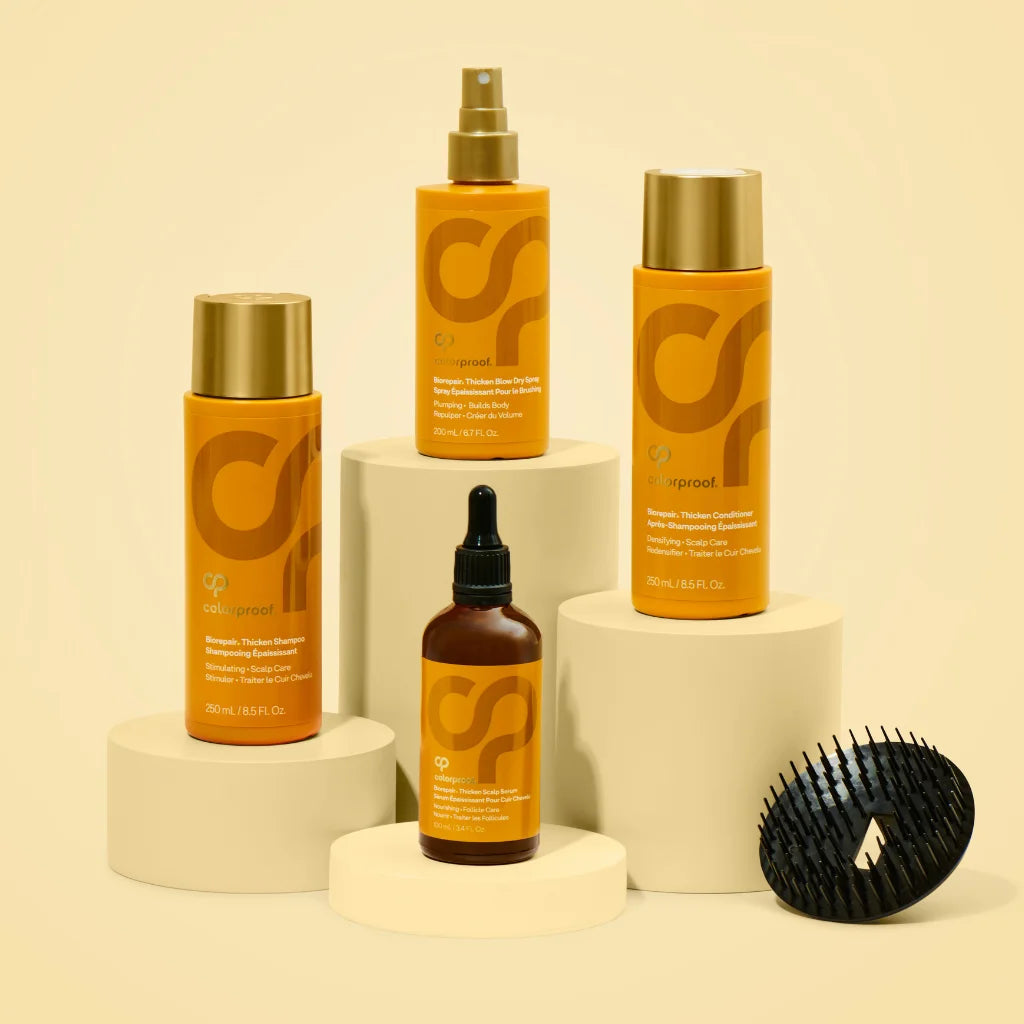
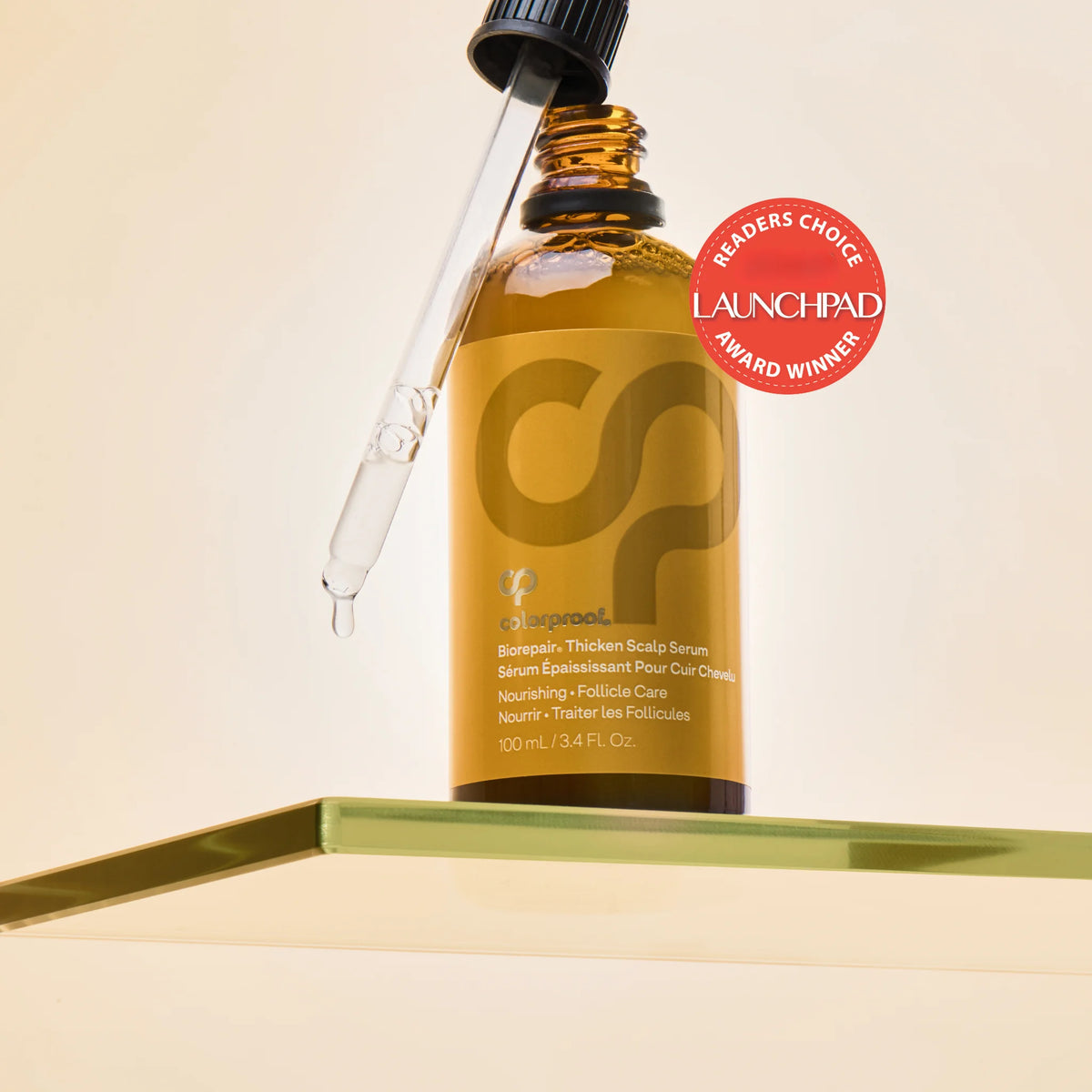
Keep your scalp clean and balanced, since that's where healthy hair begins. Biorepair Thicken Shampoo cleanses and exfoliates the scalp without stripping your color, and a treatment like Biorepair Thicken Scalp Serum nourishes the scalp environment while you recover. For the look of fuller hair day to day, the color-safe Biorepair Thicken Collection adds body and the appearance of density to fine, shedding hair. Beyond products, just be gentle: go easy on heat, keep styles loose, and use a soft touch when detangling fragile strands.
Will Your Hair Grow Back?
Yes, for the vast majority of people. GLP-1 shedding is telogen effluvium, which is temporary by its very nature. As your weight stabilizes and your nutrition catches up, the follicles restart. Shedding usually slows within weeks of closing the nutritional gap, regrowth shows around two to three months later, and density rebuilds over six months to a year. Ozempic hair thinning is a phase, not a life sentence. If it's severe or drags past six months, check with your doctor to rule out other causes.
A few things can help the process along. Protein is the big one: hair is built from keratin, and keratin needs amino acids. Most people on GLP-1s are eating far less than before, and protein is usually the first shortfall. Aiming for 80 to 100 grams a day gives your follicles something to work with, but always consider speaking with your dietitian on the right amount for you. Iron, zinc, biotin, and vitamin D matter too, so a basic blood panel can flag anything that's running low.
Beyond nutrition, treat your hair gently during its recovery. Skip tight styles, cut back on heat tools, and avoid harsh chemical treatments. The new growth coming in is fragile, and rough handling can break it before it has a chance to thicken up.
Stress also plays a role here, and worrying about hair loss can, ironically, feed the cycle. The follicles are doing their job. They just need time, fuel, and a little patience.
Frequently Asked Questions
Does Ozempic cause hair loss?
Not directly. Some people on Ozempic do experience hair loss, but it's driven by the rapid weight loss and reduced food intake the medication causes, not the drug attacking your follicles. It's a temporary shedding called telogen effluvium, and it's very manageable with good nutrition and patience.
Is Ozempic hair loss permanent?
Almost never. Since it's telogen effluvium triggered by weight loss, it resolves once your weight and nutrition stabilize. Most people see shedding slow within weeks and regrowth within a few months. Closing the nutritional gap is what turns it around.
Do Wegovy and Zepbound cause the same hair loss?
Yes, through the same mechanism. Wegovy is semaglutide like Ozempic, and Zepbound is tirzepatide, but both drive rapid weight loss, which is the real trigger. The prevention and recovery steps are identical across all GLP-1 medications.
How do I stop hair loss from GLP-1 medications?
Focus on nutrition, never on quitting your medication without medical advice. Prioritize protein, cover iron, zinc, vitamin D, and B12, eat enough nutrient-dense food, and discuss a gentler pace with your doctor. Support the scalp with gentle, color-safe care while it recovers.
Should I stop taking Ozempic if my hair is falling out?
Not on your own. Talk to your prescribing doctor first, since the medication may be important for your health. In most cases, the shedding is temporary and can be managed through nutrition and gentle care, with no need to stop treatment at all. Your doctor can adjust the dose if needed or recommend supplements to support hair health while you stay on treatment.
Conclusion
So, does Ozempic cause hair loss? Indirectly, for some people, and almost always temporarily. The real culprit is the rapid weight loss and reduced intake these medications cause, which is genuinely good news, because it means the fix is in your hands, not in abandoning a treatment that's working for you.
Feed your body well, especially protein and the key nutrients; work with your doctor on pace, and care gently for your hair and scalp with color-safe products while it recovers. Give it a few months. Ozempic hair thinning almost always turns out to be a passing chapter on the way to a healthier you, hair very much included.